

Understanding David Wilcock’s Suicide
The Sudden Collapse of a Lifetime of Forced Positivity

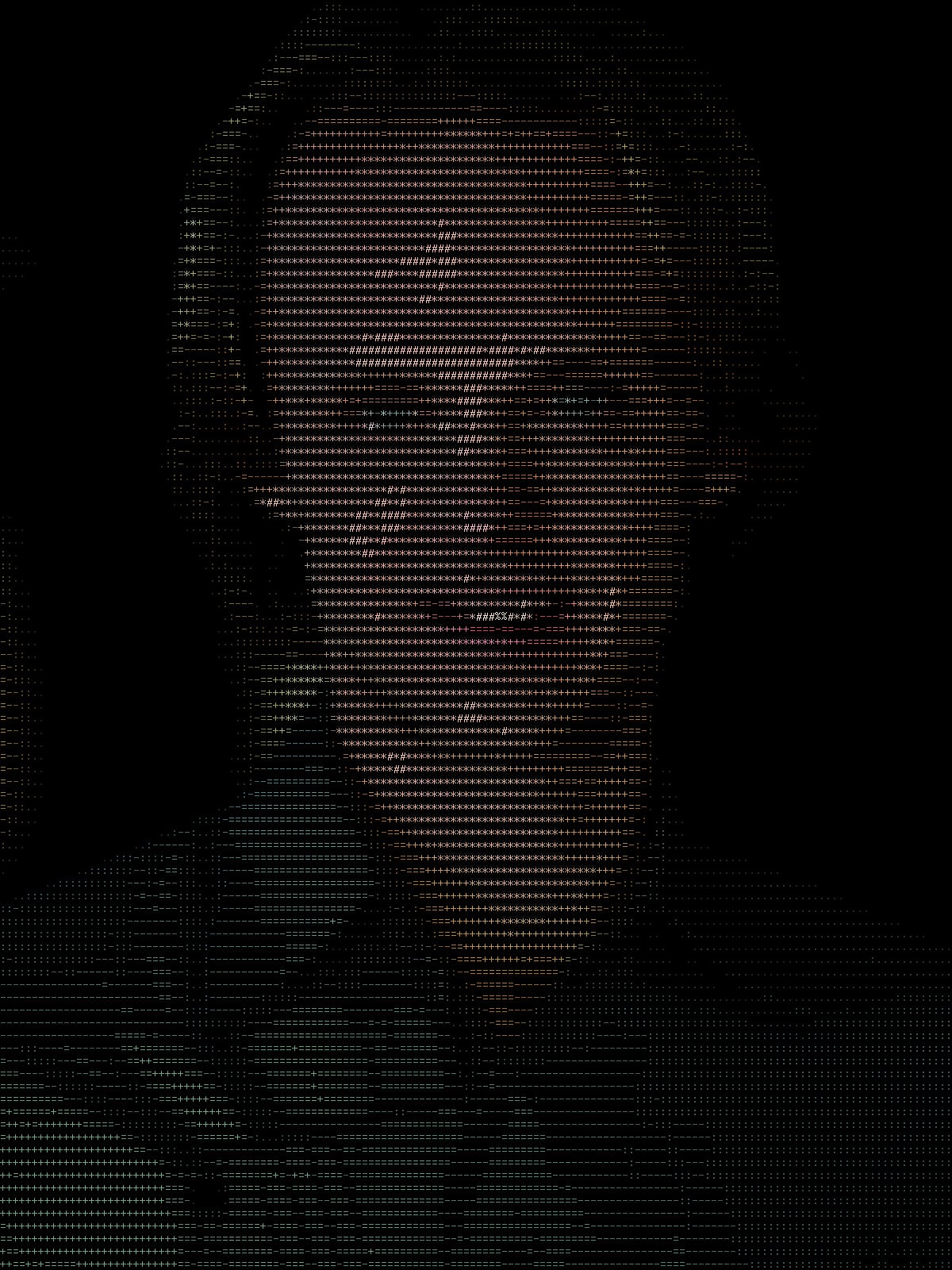
David Wilcock, the prolific author, YouTube personality, Ancient Aliens fixture, and self-proclaimed reincarnation of Edgar Cayce, died by suicide on April 20, 2026, outside Nederland, Colorado, during a mental-health crisis. Authorities and his family cited a long struggle with depression and overwhelming financial debt. Yet those surface facts, while undeniably real, do not fully capture the deeper psychic rupture that appears to have precipitated his final act. One of his very last public statements—an X post dated April 19, 2026—offers a haunting window into the moment the scaffolding gave way.
“There have been amazing twists in the story, and I have decided we need to engage this head on!
No fear!
I do have a positive view on this that we will be sharing, so don’t miss it!”
— One of Wilcock’s last X posts.
The language is vintage Wilcock: the dramatic pivot, the defiant optimism, the promise of a redemptive reveal just around the corner. For decades he had built an empire on exactly this reflex—confronting evidence of malevolent forces, negative entities, or cosmic deception, only to insist, with almost superhuman determination, that the ultimate arc bent toward benevolence and ascension. Followers loved him for it. The community that coalesced around his lectures, books, and videos functioned as a mirror, perpetually reflecting back the grandiosity of his Cayce identity and the comforting certainty that humanity’s cosmic story was, at heart, a love story.
That mirror, it seems, finally cracked.
Wilcock’s entire public persona rested on a hard-headed insistence that even the darkest “twists” could be reframed through a positive lens. Negative entities in the Law of One material? Merely catalysts for growth. Government-UFO secrecy? A necessary stage on the way to disclosure and planetary awakening. His own claimed past-life memories as Edgar Cayce? Proof of a soul contract to guide humanity through the end times. These were not minor flourishes; they were the load-bearing beams of a belief system that had sustained him—and tens of thousands of believers—for years. When the “amazing twists” he alluded to in that final post arrived, they evidently struck at the very foundation. What had once been manageable cognitive dissonance became an instantaneous, total unraveling.
Psychologically, this reads like a classic inertia threshold breakdown moment: the point at which a long-accumulated delusional structural investment in self, reinforced by fame, income, and adoration, can no longer absorb contradictory evidence. The embarrassment would have been crushing. Not merely personal disillusionment, but the public realization that one had spent decades encouraging others to invest emotionally and financially in a narrative that was, in the end, untenable. For a man who had positioned himself as a beacon of cosmic optimism, the sudden awareness of having inadvertently participated in a collective self-deception may have felt intolerable. The same audience that had once amplified his confidence now became an imagined jury passing silent judgment. In that light, the cheerful bravado of “No fear!” and “I do have a positive view” reads less like genuine hope and more like a final, desperate assertion of the old operating system—one last attempt to outrun the collapse that had already begun.
None of this excuses or romanticizes suicide. Mental illness and crushing debt were real and lethal factors. But to ignore the ideological dimension is to miss the uniquely modern tragedy here: a public intellectual whose identity was fused to a grand metaphysical narrative, only to watch that narrative disintegrate in real time, with the entire internet watching.
In stark contrast to the benevolent-extraterrestrial, ascension-oriented worldview Wilcock had championed stands a very different assessment of the UAP phenomenon—one that does not rely on secret agencies, reverse-engineered craft, or hopeful cosmic alliances. As detailed in my report The Alien UAP Deception: Inner-Terrestrial Influences and Humanity’s Ancient Compromise, the entities behind the majority of UAP activity are not visitors from distant stars but inner-terrestrial intelligences—fallen, earth-bound beings operating from subterranean realms (often mythologized as Agartha) that have interacted with humanity since antiquity.
These forces, the report argues, have engaged in a millennia-long pattern of temptation and technological seduction, beginning with the biblical archetype of the Edenic exchange: accelerated knowledge (genetic, energetic, material) offered in return for sovereignty and free will. Nuclear testing in the mid-20th century reportedly disrupted their subterranean environment, prompting more overt interventions disguised as extraterrestrial visitations. The 1947 Roswell incident, subsequent treaties, and the Invention Secrecy Act are framed not as evidence of government control but as symptoms of a deeper, pre-existing compromise that no earthly institution truly commands. The ultimate aim, per this analysis, is self-preservation through human depopulation and continued influence—not the benevolent disclosure or spiritual evolution Wilcock had spent his career promising.
Where Wilcock saw (or needed to see) a positive arc, this perspective sees an ancient, ongoing deception that predates and outlasts any modern intelligence apparatus. It demands not forced positivity but radical discernment, spiritual sovereignty, and the rejection of further contracts—precisely the kind of unsparing realism that Wilcock’s framework could not accommodate once the “twists” became undeniable.
David Wilcock’s death is a loss also for those who found comfort in his message. It is also a cautionary tale about the psychological peril of anchoring one’s entire sense of self to an optimistic cosmology that reality eventually refuses to ratify. In the end, the man who urged the world to have “no fear” may have been unable to face the fear that his own carefully constructed positive view had become untenable. The universe, it turns out, does not always bend to our need for a happy ending. Sometimes the twists stay twisted—and the only honest response is to look at them without flinching.